Feeds:
Posts
Comments
 . 
[ poems by Dana Levin, Christina Baumis, Janice F. Booth,
Natalie Canavor, David Winship, Sherry Siddall ]
 . 
Watching the Sea Go
 . 
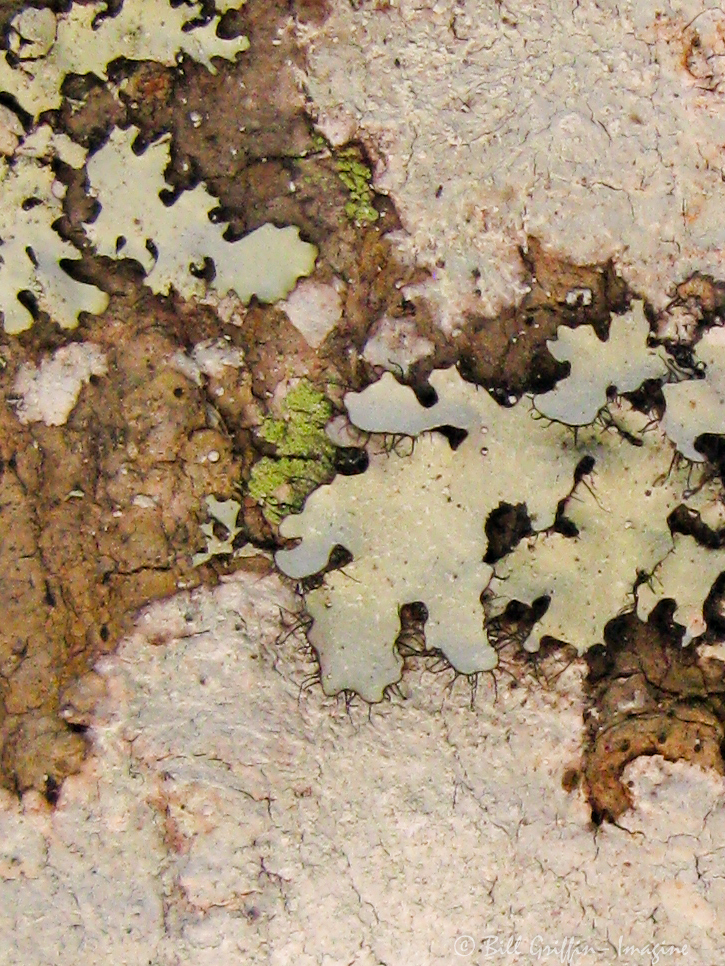
               Thirty seconds of yellow lichen.
 . 
Thirty seconds of coil and surge,
               fern and froth, thirty seconds
                                of salt, rock, fog, spray.
 . 
                                                                           Clouds
 . 
moving slowly to the left—
 . 
               A door in a rock through which you could see
 . 
                                            __
 . 
another rock,
                                laved by the weedy tide.
 . 
               Like filming breathing—thirty seconds
 . 
of tidal drag, fingering
               the smaller stones
                                down the black beach—what color
 . 
               was that, aquamarine?
Starfish spread
 . 
                                their salmon-colored hands.
 . 
                                            __
 . 
               I stood and I shot them.
 . 
I stood and I watched them
               right after I shot them: thirty seconds of smashed sea
                                while the real sea
 . 
                                thrashed and heaved—
 . 
               They were the most boring movies ever made.
I wanted
 . 
                                to mount them together and press Play.
 . 
                                            __
 . 
               Thirty seconds of waves colliding.
Kelp
 . 
               with its open attitudes, seals
                                riding the swells, curved in a row
 . 
                                just under the water—
 . 
                                                 the sea,
 . 
               over and over.
                                                 Before it’s over.
 . 
Dana Levin
from Banana Palace. Copyright © 2016 by Dana Levin and Copper Canyon Press, http://www.coppercanyonpress.org. At The Poetry Foundation.
selected by Tina Baumis
 . 
 . 
Ms. Levin’s poem evokes sadness each time I read it. Her image of the vast empty ocean is aimed to convey loss with minimal words. The title is perfect as she ebbs and flows leading our thoughts along with hers. Ms. Levin’s poem brings the encroaching shadow while I reflected on nature’s generous glow.
  — Tina
 . 
IMG_3599
 . 
❀ ✿ ✾ ❁ ❀
 . 
Lake Freeman
 . 
Curled against the nestling seat curve,
strands of hair blowing like dandelion seeds.
Dipping fingers in clear lake water
impermanent patterns sparkle,
 . 
break and dance in the sun’s bountiful balm.
Crisp water loosens pent up tension
eases into soothing meandering thoughts
as those densities are flung turbulently behind
 . 
in the boat’s churning frothy wake.
I am young, once again.
 . 
Tina Baumis
 . 
❀ ✿ ✾ ❁ ❀
 . 
Blue Spaces Elegy     *
 . 
Anchored by a wide, lazy creek, the street I live on
climbs to a four-square farmhouse on the bluff
with its dilapidated carriage stable standing sentry;
the old barn collapsed years ago.
The land along our street— clay now,
once pristine blue space.
 . 
Long ago, the farmer grew corn and tobacco on this land.
A lane, rutted and raw descended from barn
 to creek through blue space.
The plow, farmhands, and wagons piled with the harvests
moved down to the creek and up the lane,
and the farmer’s family prospered.
 . 
Skiffs plied the creek and brought their catch
to the farmer’s dock at the end of the lane.
The creek’s rich stock of Bay crabs and fish
surpassed the land’s bounty.
And the lane morphed into a gravel road
where rusty pickups ladened with
bushels of crabs and shellfish came and went.
And the farmer’s family prospered.
 . 
When the depleted land failed,
the farmer sold it as lots to watermen
and small clapboard cottages popped up beside the creek.
But the watermen’s catch dwindled;
and town folks bought the plots, tore down the cottages
and built sturdy ranchers and split-levels with driveways.
Curbs were added, and the gravel road was paved,
burying three small tributaries beneath the street,
cutting off the spring water that fed the old creek.
When the rains came, soil and lawn fertilizer
washed down the paved street, over the
buried springs, into the tired creek,
but the farmer’s family prospered.
 . 
The old farmhouse watched;
the carriage stable and barn emptied.
The farmer and the farmer’s wife died.
The neighborhood grew.
Builders came and went.
People prospered,
homes expanded.
The creek bed clogged with silt and runoff.
The farm was gone, the watermen were gone
from the now brown and turgid creek,
 . 
and the farmer’s family lives
somewhere else.
 . 
Janice F. Booth
*    Blue spaces are environments with prominent water features known to improve our well-being, similar to “green spaces.”
 . 
 . 
Thank you, Bill, for this opportunity to let my work speak, in my own small way, of the earth’s suffering. Having lived on my creek-side street for over 40 years, I have watched changes both micro and macro in the tiny part of the planet I inhabit.  I was moved to write this poem as our creek turned brown and thick with algae from the winter run-off and spring rains. 
— Janice
 . 
❀ ✿ ✾ ❁ ❀
 . 
City Trees
 . 
Back then it was safe for a 5-year old
to elevator down to the street and jump rope
or play potsy with other kids on the block,
hopping between chalked boxes on the sidewalk.
No mothers hovering to watch.
A safe world if not a pretty one,
hundreds of such blocks with
precisely aligned 6-story buildings:
a bleak ocean of brick in shades of muddy brown.
 . 
But East 177th Street harbored something alien.
Lining the street for exactly one block,
Grand Concourse to Morris Avenue,
a row of  majestic, giant trees endured.
Huge dark trunks rising way past the flat rooftops,
branches arcing over the six stories.
Like no other street I’d seen.
 . 
I never knew why they grew in such unwelcoming habitat.
Nor what kind of trees they were,
the shape of their leaves, their color in autumn.
In truth my young self hardly noticed the trees.
Yet these icons of nature hovered over my childhood.
Made my drab street unique and colorful,
gave me something to look up to-literally.
 . 
Hinted at vistas way beyond my limited view.
I did not understand those trees, but loved them.
 . 
Natalie Canavor
from The Song in the Room
 . 
 . 
Growing up in a New York City neighborhood gave me little early exposure to nature beyond trips to a few parks and an occasional picnic to the Westchester “countryside.” Animal life meant squirrels. Pigeons and sparrows were the birds we knew. And if anything green graced the immediate environment, I can’t recall it. Except for the trees. I had a chance to revisit the Bronx recently and found that my trees had vanished from the street. I feel sorry for the new crops of kids living on this not-so-special-anymore city block.
— Natalie
 . 
 . 
❀ ✿ ✾ ❁ ❀
 . 
Watershed Community
 . 
We live in a Watershed Community.
Water here since the dawn of time
will be here after the sunset of time
same water, going round and round
circulating by our solar pump engine
a closed cycle circling our Earth
coursing through our hills
our bodies, our communities
connecting through our water
around us, in the air, in the ground
flowing in the streams, rising in the air
falling in the rain
 . 
over and over.
 . 
Water is our source, our soul
keeping us growing by its flowing
through our watershed
sustaining us, nourishing us, enlivening us.
We are baptized into life on Earth
through this ancient water
tumbling through these hills
dripping through our watershed
down the mountains to the sea
nurturing our fellow life forms
eroding surfaces, changing form
shaping our lives.
 . 
Do for others downstream
as you would have
others upstream
do for you.
 . 
David Winship
Bristol, Tennessee
 . 
❀ ✿ ✾ ❁ ❀
 . 
October Tide
 . 
A nor’easter dabbles off the coast
raising the water to whiteness,
the wind to forgetting itself
in gusts and lurches.
 . 
Back canals are sober enough
for cormorants to lounge
wings stretched in worship
as deep cicadas drone in the cedars.
 . 
The tide escapes as it always does
twice a day, responding to the
slippery Moon, pulling the blood
in flood time, neaps and springs.
 . 
Gravities align, Sun and Moon
dance out of habit,
the perfect mathematics
just enough to keep us here.
 . 
Sherry Siddall
 . 
 . 
October Tide appears in my first full length book, Transformed and Singing, recently published by Main Street Rag.  If you stop to think about the almost impossible coming together of life on our planet, you have to sit down and take a breath. This idea occupies a lot of my time as a poet, and in Transformed and Singing (hint: cicadas abound). 
— Sherry Siddall
 . 
 . 
❀ ✿ ✾ ❁ ❀
 . 
I am sure it is a great mistake always to know enough to go in when it rains. One may keep snug and dry by such knowledge, but one misses a world of loveliness.
— Adeline Knapp
A rainy day is the perfect time for a walk in the woods.
— Rachel Carson
 . 
Thank you for celebrating the month of April with International Earth Day (April 22) and National Poetry Month. Readers have selected poems that connect us to our planet and each other. If you have a poem that has rooted you to the earth and spread your branches into bright sky, please share! It can be a poem by your favorite writer, living or dead, a poem of your own, or both. We will continue sharing Earth poems as long as you send them.
 . 
Send a your poem(s) in the body of the email or as .DOC or .RTF to:
ecopoetry@griffinpoetry.com 
 . 
Please include your comments or reaction to the poem. And publication acknowledgments if previously published.
 . 
Feel free to invite others to send their favorite Earth Day poems. Please refer them to this link for instructions: EARTH DAY EVERY DAY. Perhaps some day we will be able to say we live in the Age of Connection.
 . 
 . 
Thank you for visiting Verse and Image: If you would like to receive an email each time a post appears, please SUBSCRIBE to Verse and Image using the button on the Home Page.
 . 
If you have a hard time finding the SUBSCRIBE button on this WordPress site, you can send me your email address and I will add you to the subscriber list. Send your request to
 . 
COMMENTS@GRIFFINPOETRY.COM
 . 
Thanks again for joining the conversation.
 . 
— Bill
 . 
❀ ✿ ✾ ❁ ❀
 . 
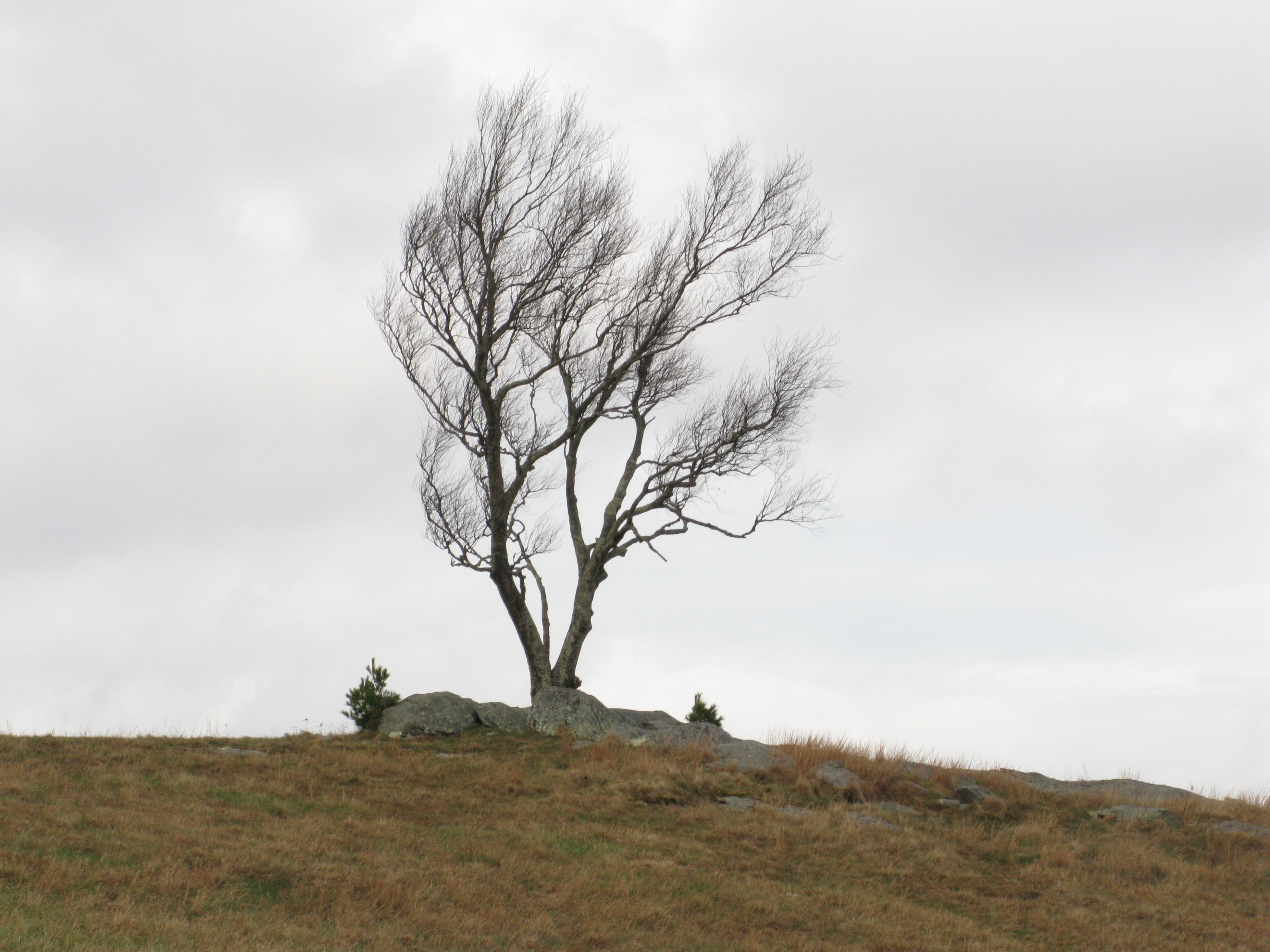
2017-02-11 Doughton Park Tree
 . 
 . 
[ poems by Gary Snyder, Diana Dinverno, Terry Bornhorst Blackhawk, 
Gina M. Streaty, Elizabeth H. Lara, Fred Chappell ]
 . 
Prayer For The Great Family
 . 
Gratitude to Mother Earth, sailing through night and day—
  and to her soil: rich, rare, and sweet
      in our minds so be it
 . 
Gratitude to Plants, the sun-facing light-changing leaf
  and fine root-hairs; standing still through wind
  and rain; their dance is in the flowing spiral grain
      in our minds so be it
 . 
Gratitude to Air, bearing the soaring Swift and the silent
  Owl at dawn. Breath of our song
  clear spirit breeze
      in our minds so be it
 . 
Gratitude to Wild Beings, our brothers, teaching secrets,
  freedoms, and ways, who share with us their milk;
  self-complete, brave, and aware
      in our minds so be it
 . 
Gratitude to Water: clouds, lakes, rivers, glaciers;
  holding or releasing; streaming through all
  our bodies salty seas
      in our minds so be it
 . 
Gratitude to the Sun: blinding pulsing light through
  trunks of trees, through mists, warming caves where
  bears and snakes sleep—he who wakes us—
      in our minds so be it
 . 
Gratitude to the Great Sky
  who holds billions of stars—and goes yet beyond that—
  beyond all powers, and thoughts
  and yet is within us—
  Grandfather Space.
  The Mind is his Wife.
 . 
      so be it.
 . 
Gary Snyder (after a Mohawk prayer)
from EARTH PRAYERS, edited by Elizabeth Roberts and Elias Amidon
selected by Bill Griffin
 . 
 . 
I am excited to see so many wood anemone blooming this April. A galaxy where I noticed only a few lonely stars last year. Joyful in the discovery, excited to share – let those feelings speak their name, Gratitude. And let gratitude grow into the love that inspires to me to hold all living things safe and sacred, this great family of life with which I share our planet.
— Bill
 . 
 . 
❀ ✿ ✾ ❁ ❀
 . 
We Visit the Tomales Point Trailhead 
as Congress Continues to Threaten the Sale of Federal Land 
 . 
My daughters and I park beneath a canopy of old trees,
a windbreak when this land was a working dairy ranch.
Beyond the once-whitewashed barn, bunkhouses,
and sheds, the trail leads us onto sand
winding through lemon-hued lupines
so tall they sway above our heads.
 . 
We ooh and aah at the vast exuberance—
California poppies, thistles with lush purple fringe,
and, after a gentle climb, we look west,
 catch sight
of the Pacific’s immense blue, its rippled light,
a spectacular cinematic sky. To the east,
gold and green meadows rise.
 . 
We walk across the peninsula’s clavicle,
its tender ridge dips into hollows,
monarchs flutter, tend to blooms.
 . 
I follow the lift of my girl’s arm
pointing to the summer-saturated hills.
Grazing tule elk, once thought extinct,
somehow still here, keep their distance,
raise their massive heads.
 . 
A Cooper’s Hawk circles the grassland.
Far below, birds we can’t identify glide
in formation just beyond the ocean’s reach.
Trills and whistles fill the scented air—
faintly honeysuckle, intoxicating, wild.
 . 
My younger daughter notices tiny orange petals—
scarlet pimpernel clings to the path’s edge, firmly rooted,
part of the shoreline’s crown.
 . 
As the land bends, we pause
high above a cove, a stretch of surf-ruffled beach
dotted with rock—scan for sea-lions, listen
for their barks before we move on—
the bluff too fragile to descend.
 . 
Diana Dinverno
 . 

[photo by Diana Dinverno]

 . 
 . 
In the Spring of 2025, my daughters and I visited the Point Reyes National Shoreline and walked the Tomales Point Trail, owned and managed on our behalf by the U.S. government. It is one of the most wondrous and beauty-filled places I’ve seen. Leading up to the visit, we’d heard reports of proposals in the “One Big Beautiful Bill Act” to sell 2-3 million acres of public lands—and authorize the sale of many more. It was heartbreaking to think this public place, available to anyone to explore, could be sold to the highest private bidder for its stunning ocean views. Due to immense public opposition, the provisions were removed from the bill, but in the face of continued pressure by some members of Congress and our current Administration’s quiet dismantling of the U.S. Forest Service, our National Parks, with their still-wild places, remain at risk. 
 . 
Although I’ve spent most of my life in the Midwest, I currently live in Texas, trying to learn the names of trees, flowers, and birds. 
— Diana
 . 
❀ ✿ ✾ ❁ ❀
 . 
Calling the Owl
Audubon Christmas Bird Count, 
Oakland County, MI, 1995
 . 
This time the owl eludes us
where we stand, trying to call him in
with his own voice
 . 
which we’ve captured on tape
to release to the predawn woods.
Press a button. The air flutters,
rushing from our black box
 . 
what is hidden from us—
 . 
wing-like quaverings—
 . 
soft bursts of song.
If light mutes him, shadows offer hope,
and we listen so intently into them
the snowy meadow
suddenly seems wider, brighter
with news from beyond its perimeter.
Don’t lift, I almost pray,
 . 
don’t disappear.
Day will break soon enough.
Let us hear your faint vibrato and absorb
what is invisible, wild and nearly gone.
Mist thickens the silence, promises
patience, echo, sound not sight.
I will let that fluty tremolo find,
fill me, give voice
to emptiness. I hold my breath to sustain
the long vowel of night.
 . 
Terry Bohnhorst Blackhawk
first appeared in Yankee (Jean Burden, editor); collected in body & field (Michigan State U. Press, 1999) and the chapbook of bird poems,  The Whisk & Whir of Wings (Ridegway Press, 2015). Margaret Gibson included it in Waking Up to the Earth: Connecticut Poets in a Time of Global Climate Crisis (Grayson Books, 2021), an anthology she produced as CT Poet Laureate.
 . 
 . 
This is one of my earlier poems, written from my love of birds and birding — a love that Jan Booth introduced to me early in our friendship which goes back over 55 years (!) to our days as first-year teachers in Detroit.
— Terry
 . 
❀ ✿ ✾ ❁ ❀
 . 
M. Wright Fishing at Lake Jordan
(3/27/05)
 . 
I sit, wait,
watch him
cast his long line—
orange cork breaks water,
shatters oak trees. Mirror images
shift, shimmy, merge in symmetrical circles
in water, murky gray
like the slate-blue sky that slumps to meet it.
 . 
A red-tailed hawk sprawls on evening air,
hovers overhead, its wings slice
fast-approaching night.
A crappie, jerked to the surface,
fights against the line,
treads gelatinous green moss
with its silver head
before breaking free
I pray like Jonah.
Pray for two fish to feed the multitude.
 . 
To the evensong of crickets,
twilight weeps a misty rain
for me embraced by cold
as the man in gray dungarees
becomes his own shadow,
a tree like willow oaks coddling him,
head lowered, shoulders
descending with darkness.
 . 
As the pale green bucket
rings out emptiness,
minnows are turned loose.
A spring moon clings to sky,
reels me into myself…
 . 
Gina M. Streaty
 . 
 . 
I drafted this poem several years ago during a fishing outing with a friend. He tried to catch fish; I sat at a picnic table penning poems for hours. Nature always quickens my spirit. I am more connected to the natural world than I am people. Truth. Nature with its vibrant colors, textures, scents, sounds/music, secrets, mysteries, motion, moods, and magic is spectacular. It captivates me. My bucket list lengthens with each new nature screensaver on my computer. We are blessed to have earth’s infinite exquisiteness and the innumerable ways nature inspires, consoles, protects, heals, sustains, and forgives us. How can God not be the creator? Earth is our Eden, a spectacular, invaluable gift to us. We certainly don’t deserve it, but earth deserves our protection, our love, and bare minimum, our respect.
 . 
My poet friend Lenard D. Moore told me about your call for Earth Day themed poems. He and I share an intense love for the natural world and poetry.
— Gina
 . 
 , 
❀ ✿ ✾ ❁ ❀
 . 
Part-Way Down the Mountain Path
 . 
Late morning, the air clings
despite the sheltering trees.
High-stepping over weeds
and scattered gravel, we come to
a hollow rotting log, so long fallen
the soil has packed itself
against one side, a sort of ledge,
and there, a hen with three chicks.
Mama hen hops onto the ledge,
pirouettes slowly on scaly yellow
legs to watch her chicks scramble
and bumble and hop and
slide back and get up again.
She clucks and struts, goes
back around to the low side
of the log, hops over once more,
waits while her chicks
try out the game. We watch
for a long time – over and over
she jumps / waits / circles back –
until chickafterchickafterchick
they follow her over that log.
 . 
Elizabeth H. Lara
Silver Springs, Maryland
 . 
 . 
I wrote this very plain and simple poem while at our farm in the mountains of San Cristobal, Dominican Republic.
— Liz
 . 
❀ ✿ ✾ ❁ ❀
 . 
A Prayer for the Mountains
 . 
Let these peaks have happened
 . 
The hawk-haunted knobs and hollers,
The blind coves dense as meditation,
The white rock-face, the laurel hells,
The terraced pasture ridge
With its broom sedge combed back by wind:
Let these have taken place, let them be place.
 . 
And where Harmon Fork piles unrushing
Against its tabled stones, let the gray trout
Idle below, its dim plectrum a shadow
That marks the stone’s clear shadow.
 . 
In the slow glade where sunlight comes through
In circlets and moves from leaf to fallen leaf
Like a tribe of shining bees,
Let the milk-flecked fawn lie unseen, unseing.
 . 
Let me lie there too
And share the sleep
Of the cool ground’s mildest children.
 . 
Fred Chappell
from Spring Garden, © 1995 by Fred Chappell, Lousiana State University Press.
selected by Bill Griffin
 . 
 . 
❀ ✿ ✾ ❁ ❀
 . 
The more clearly we can focus our attention on the wonders and realities of the universe about us, the less taste we shall have for destruction.
– Rachel Carson (1907-1964)
 . 
Thank you for celebrating the month of April with International Earth Day (April 22) and National Poetry Month. Readers have selected poems that connect us to our planet and each other. If you have a poem that has rooted you to the earth and spread your branches into bright sky, please share! It can be a poem by your favorite writer, living or dead, a poem of your own, or both. We will continue sharing Earth poems as long as you send them.
 . 
Send a your poem(s) in the body of the email or as .DOC or .RTF to:
ecopoetry@griffinpoetry.com 
 . 
Please include your comments or reaction to the poem. And publication acknowledgments if previously published.
 . 
Feel free to invite others to send their favorite Earth Day poems. Please refer them to this link for instructions: EARTH DAY EVERY DAY. Perhaps some day we will be able to say we live in the Age of Connection.
 . 
 . 
Thank you for visiting Verse and Image: If you would like to receive an email each time a post appears, please SUBSCRIBE to Verse and Image using the button on the Home Page.
 . 
If you have a hard time finding the SUBSCRIBE button on this WordPress site, you can send me your email address and I will add you to the subscriber list. Send your request to
 . 
COMMENTS@GRIFFINPOETRY.COM
 . 
Thanks again for joining the conversation.
 . 
— Bill
 . 
❀ ✿ ✾ ❁ ❀
 . 
2020-09-08b Doughton Park Tree
 . 
 . 
[ poems by Connie Green, Kari Gunter-Seymour, 
Jenny Bates, Annie Woodford, Paul Jones]
 . 
Song at Daybreak 
 . 
Behind the mountains this morning
a soft curtain of pink, dawn dipping
into her palette, my soul the recipient
of her artistry, this small moment
that would not have occurred
had I not wakened early, wandered
sleep-deprived into the kitchen
and turned my face toward the ridges-
 . 
those ridges that daily wait for me
to look up, to accept, if only
for a minute, the gift they offer
and have offered since the forces
of nature, the work of time pushed
them from plain to towering majesty,
our common stardust knitting mountain,
kitchen, aging woman into song notes that lift
and drift, the finite urging toward the infinite.
 . 
Connie Jordan Green
selected by Kari Gunter-Seymour. First appeared in Women Speak, Volume Eleven (Sheila Na Gig Editions 2025)
 . 
This gorgeous Song at Daybreak by Connie Green reminds me that there is so much splendor and joy to be had if we let ourselves be still long enough to truly embrace all that the earth (and sky) has to offer, and that aging too is a gift, because it means we have been given so many more opportunities to stand in awe and wonder of it all.  — Kari Gunter-Seymour
 . 
 . 
Ten Miles North of Lore City, Guernsey County, Ohio
 . 
Oh, Salt Fork, I’ve come to hide
inside your autumn, walk
beneath the cathedral of your branches
become a meditative painting,
a Cézanne—your impressions
 . 
revealed in planes of pigment,
the slow study of light,
pin oak and American beech awash
in swaths of topaz and carnelian,
the lake a reverie of reflections.
 . 
The universe is out of whack, tremulous
in the pathos of floods, wildfires and drought.
Here, red squirrels wax comedic,
all bark, tuck and tumble, a white-tailed
snorting at their antics.
 . 
Tangy pockets of mugwort
and mountain mint intoxicate my airways
weak-knee me into giggles.
Chickadees hip-hop branch to thicket,
their black caps adorably gangsta.
   . 
Above, an osprey chirps its tea-kettle whistle,
ascends, thrusts,  disappears,
returns, as if parleying ancestral maps
stored inside the lace of its bones.
Cricket songs stitch the afternoon.
 . 
I don’t know how long your trails can hold
such abundance, your fervor of tints and textures
winding their way to my insides, transcendent
as a psalm, the rhythm of your balms and breezes
rumoring their promise of peace.
 . 
Kari Gunter-Seymour
First appeared in The Nature of Our Times (Paloma Press 2025)
 . 
Thank you for allowing me the opportunity to submit a poem I love by poet Connie Green and one of my own as well, in honor of Earth Day. KG-S
 . 
 . 
Connie Jordan Green lives on a farm in East Tennessee where she writes and gardens. She has published award-winning novels for young people, newspaper columns, poetry chapbooks and collections, most recently Nameless as the Minnows, Madville Publishing. Her poetry has been nominated for Pushcart Awards. She frequently teaches writing workshops.
 . 
Kari Gunter-Seymour is the immediate past Poet Laureate of Ohio and author of three award-winning poetry collections, including Dirt Songs (EastOver Press, 2024) winner of the 2025 IPPY Bronze, NYC Big Book and Feathered Quill Awards. Her newest collection, What Teethes Within is forthcoming from University Press of Kentucky, August 2026. Her work has been featured in a variety of publications including the American Book Review, Poem-a-Day, World Literature Today and The New York Times.
 . 
❀ ✿ ✾ ❁
 . 
 . 
Virga
 . 
Every raindrop panics me now
long before it arrives
I feel like an old Dog who hides
in the bathroom sniffing grey skies
 . 
I go out walking anyway make
myself brave but I don’t really don’t want
it to rain
I want fear to evaporate like a virga
line I want to become a cloud dropped
full of reflection and affection
when I listen to rain I hear echoes
of your voice not in my ears anymore
asking under any circumstance
will you want to make love again?
 . 
Jenny Bates
selected by Paul Jones
 . 
 . 
Love Poem for the Appalachian Rainforest 
 . 
The trees as rib cage, as sea-
bare branches tapping each other,
signing furiously the word
 . 
for wind. Temperate rainforest
filled with broken trees,
bracken tinder. I pray
 . 
for damp weather, fog, snow-
a proper frozen sojourn
among High Country clouds
 . 
plumping moss & lichen.
To keep fire at bay.
Needle and loam, trees breathing
 . 
wet breath against each other,
heavy enough to float, to form
their own ecology of hope.
 . 
Annie Woodford
selected by Paul Jones
 . 
 . 
In the Cards
 . 
Outside of Beaverdam, an old lady told the cards.
As close to a crone as the mountain side could grasp,
could hold there, cling-rooted and knotty as laurel.
 . 
She was sour on life by now, hers, which had been hard,
and the mountain itself. “It must change,” she rasped.
Fingering the whirling figure, she hissed, “This is the World.”
 . 
“It’s in the past. Better that the dancer held a sword.”
The next up, the seemingly indifferent Four of Cups.
“Ignoring the gifts and threats of the sky and earth. Peril.
 . 
That’s where we are now. In danger, but not acting. Bored
with it all. Not doing what we need to do.” She gasped,
“No not this! I would rather be telling the Devil,”
 . 
as if she already had seen, but dare not disregard,
the next card, the future told by the Tower. The last.
“The end that comes to us all both good and evil.”
 . 
Soon the storms came as they had never come before.
She and her house were washed away. Among the lost.
She saw but was not saved. Not found. Except her skull.
 . 
Paul Jones
 . 
Thanks for combining Poetry Month and Earth Day (all month long). These three poems are from the award winning anthology, Had I a Dove: Appalachian Poets on the Helene Flood, edited by Hilda Downer (Redhawk Publications 2025). Each of these poem connects human awareness and in some cases human agency in the face of the experience of the flood and what followed. The whole of the anthology is rich with the appreciation of nature during and due to climate based disaster. Besides the three poems attached, Virga by Jenny Bates, Love Poem for the Appalachian Rainforest by Annie Woodford, and In the Cards by me, the anthology holds many treasures. — Paul Jones
 . 
 . 
❀ ✿ ✾ ❁
 . 
We do not live in a Nuclear Age or an Information Age. We do not live in a Post-Industrial Age, a Post-Cold War Age, or a Post-Modern Age. We do not live in an Age of Anxiety or even a New Age. We live in an Age of Flowering Plants and an Age of Beetles. 
– Sue Hubbell, from Broadsides from the Other Orders
 . 
Thank you for celebrating the month of April with International Earth Day (April 22) and National Poetry Month. Readers have selected poems that connect us to our planet and each other. If you have a poem that has rooted you to the earth and spread your branches into bright sky, please share! It can be a poem by your favorite writer, living or dead, a poem of your own, or both.
 . 
Send a your poem(s) in the body of the email or as .DOC or .RTF to:
ecopoetry@griffinpoetry.com 
 . 
Please include your comments or reaction to the poem. And publication acknowledgments if previously published.
 . 
We will share one or two posts each week, multiple posts during the week of Earth Day, and we will keep sharing into May and beyond if you continue to respond!
 . 
Feel free to invite others to send their favorite Earth Day poems. Perhaps some day we will be able to say we live in the Age of Connection.
 . 
 . 
Thank you for visiting Verse and Image: If you would like to receive an email each time a post appears, please SUBSCRIBE to Verse and Image using the button on the Home Page.
 . 
If you have a hard time finding the SUBSCRIBE button on this WordPress site, you can send me your email address and I will add you to the subscriber list. Send your request to
 . 
COMMENTS@GRIFFINPOETRY.COM
 . 
Thanks again for joining the conversation.
 . 
— Bill
 . 
❀ ✿ ✾ ❁
 . 
Doughton Park Tree, 2022-05-17B
 .